
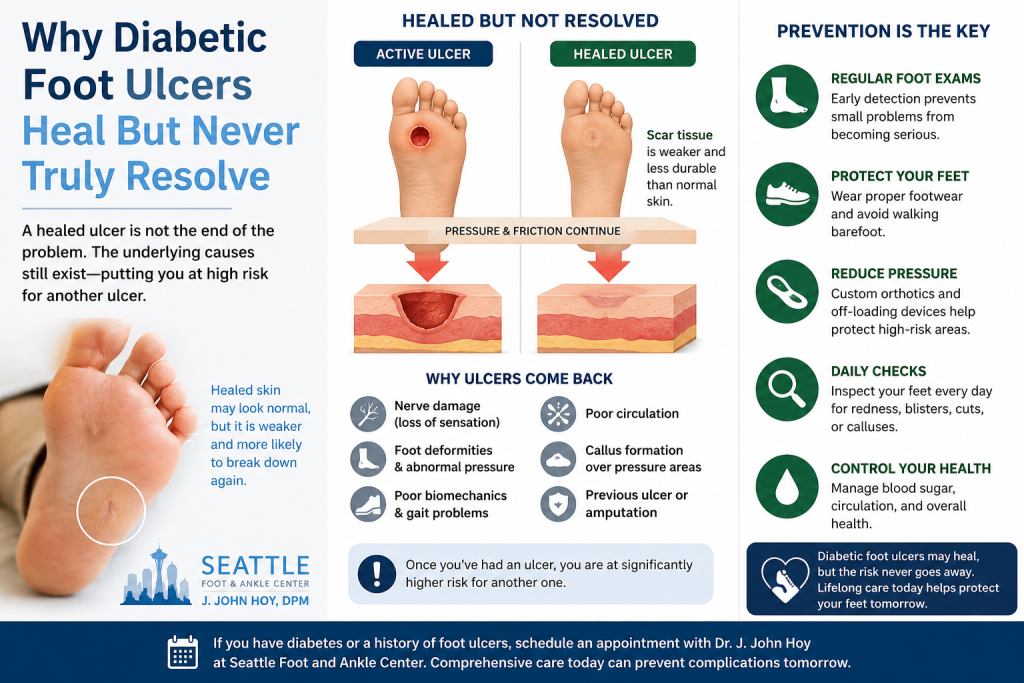
A healed diabetic foot ulcer is an important milestone—but it is not the end of the problem.
Many people believe that once a diabetic foot ulcer closes, the foot has returned to normal. Unfortunately, that is rarely the case. A healed ulcer remains one of the strongest predictors of another ulcer, making lifelong prevention and monitoring essential.
At Seattle Foot and Ankle Center, Dr. J. John Hoy helps patients understand that diabetic foot ulcer care does not end when the skin heals. The goal is to prevent the ulcer from returning, reduce the risk of infection, and preserve long-term mobility and limb health.
Why Do Diabetic Foot Ulcers Come Back?
A diabetic foot ulcer develops because the underlying conditions that caused it are often still present—even after the wound has healed.
These may include:
- Peripheral neuropathy (loss of protective sensation)
- Foot deformities that create abnormal pressure
- Limited joint motion
- Poor biomechanics and gait abnormalities
- Peripheral arterial disease
- Previous amputations
- Callus formation over high-pressure areas
- Ill-fitting footwear
Closing the wound does not eliminate these risk factors. Without addressing them, the same area remains vulnerable to breaking down again.
Healing the Skin Is Different From Solving the Problem
Think of an ulcer as a warning sign rather than an isolated injury.
The skin may close, but the tissues beneath it may remain fragile. Scar tissue is generally less durable than normal skin and may not tolerate the same repetitive pressure from walking or standing.
If excessive pressure continues every day, the skin can gradually break down again, leading to another ulcer.
For this reason, podiatrists often describe diabetic foot ulcers as being in remission rather than permanently cured.
Why Recurrence Is So Common
Research has consistently shown that diabetic foot ulcers have a high recurrence rate after healing.
The reason is straightforward:
- Neuropathy usually does not improve.
- Foot deformities remain unless treated.
- Walking mechanics continue to place stress on the same locations.
- Patients often cannot feel early warning signs because of nerve damage.
Without ongoing preventive care, small areas of skin breakdown can quickly progress into another ulcer.
Preventing Another Ulcer Requires More Than Wound Care
Once an ulcer heals, treatment shifts from wound management to risk reduction.
Depending on your individual condition, prevention may include:
- Regular diabetic foot examinations
- Callus reduction when medically appropriate
- Therapeutic diabetic footwear
- Custom orthotics to redistribute pressure
- Off-loading devices when needed
- Monitoring for skin changes
- Education on daily foot inspections
- Management of foot deformities
- Coordination with your primary care physician, endocrinologist, vascular specialist, or wound care team when appropriate
The objective is to reduce repetitive pressure before another wound develops.
Why Comprehensive Foot Care Matters
Many diabetic foot complications develop gradually and without pain.
Because neuropathy reduces sensation, patients may not notice a developing ulcer until significant damage has already occurred.
Regular evaluations allow problems to be identified early, including:
- Areas of excessive pressure
- New calluses
- Skin breakdown
- Foot deformities
- Changes in circulation
- Signs of infection
- Biomechanical problems that increase ulcer risk
Early intervention is often much simpler than treating an advanced wound.
Every Healed Ulcer Deserves Long-Term Follow-Up
A history of a diabetic foot ulcer places a patient in a higher-risk category for future complications.
Rather than thinking of treatment as complete, it is more helpful to think of care as ongoing maintenance aimed at preventing recurrence.
Regular follow-up visits allow changes in your feet to be recognized before they become serious problems.
Comprehensive Diabetic Foot Care in Seattle
At Seattle Foot and Ankle Center, Dr. J. John Hoy provides comprehensive diabetic foot care focused on preventing ulcers, preserving mobility, and reducing the risk of infection and amputation.
Whether you have a current ulcer, a recently healed wound, diabetic neuropathy, Charcot foot, or other high-risk foot conditions, the goal is the same: identify problems early, reduce pressure, and help keep your feet healthy for the long term.
If you have diabetes and have ever had a foot ulcer, don’t assume the problem is behind you simply because the wound has healed. Schedule a comprehensive diabetic foot evaluation with Dr. Hoy to help protect your feet and reduce the risk of future complications.
In pain? Don’t wait. Early treatment leads to faster recovery. Urgent appointments available. Read about Conditions We Treat. Request an Appointment online. Call: 206-682-8741 or Contact Us. Refer a Patient. If you like our content, please link it to your website. Thank you.