
Recurring foot pain can be frustrating. You rest, change your shoes, try an insole, or stop exercising for a while—and the pain improves. Then you return to your normal routine and it comes back.
That pattern is important.
Foot pain that repeatedly returns may be related to mechanical stress, a structural problem, or nerve irritation. Sometimes more than one factor is involved.
The key is identifying the underlying cause rather than repeatedly treating the symptoms.
Mechanical Foot Pain: When How You Move Matters
Your feet absorb and redistribute forces every time you stand, walk, run, or climb stairs.
Differences in foot structure, joint motion, muscle flexibility, alignment, or the way pressure is distributed can place additional stress on specific areas of the foot.
Mechanical problems may contribute to symptoms such as:
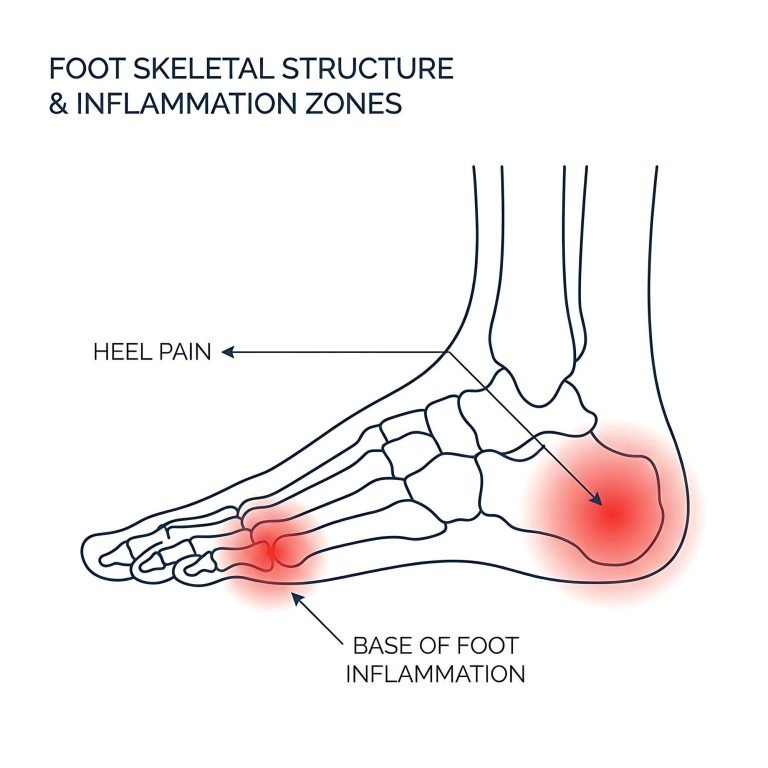
- Heel pain
- Forefoot and ball-of-foot pain
- Tendon pain
- Recurrent ankle problems
- Pain associated with prolonged standing or walking
- Symptoms that appear during particular activities but improve with rest
Seattle’s hills can make these problems particularly noticeable because changes in incline alter the demands placed on the foot and lower extremity.
A mechanical problem does not necessarily mean something is structurally “wrong” with the foot. It means that how the foot and lower extremity function may be contributing to the symptoms.
Structural Problems Can Keep Pain Coming Back
The shape and alignment of the foot can also influence where forces are concentrated.
Examples include:
- Bunions
- Hammertoes
- Flat feet
- High arches
- Differences in toe or metatarsal alignment
- Joint deformity
- Previous injury or surgery
A structural problem does not automatically require surgery.
In many cases, treatment can focus on reducing abnormal pressure and improving function through footwear changes, activity modification, rehabilitation, or custom orthotics.
The important step is determining whether a structural finding is actually related to the patient’s symptoms.
Nerve Pain Can Feel Very Different
Nerve-related foot pain is another reason symptoms may persist despite conventional treatment.
Nerve irritation or compression can produce:
- Burning
- Tingling
- Electric or shooting pain
- Numbness
- A “pebble in the shoe” sensation
- Pain that radiates into the toes
Morton’s neuroma is one example of a forefoot nerve problem. Other conditions can affect nerves elsewhere in the foot or ankle.
Because nerve pain can resemble other types of foot pain, identifying the precise location and pattern of symptoms is important.
Why Previous Treatment May Not Have Worked
When foot pain continues despite treatment, it does not necessarily mean that nothing can be done.
Sometimes the treatment was directed at the wrong diagnosis.
For example, an arch-supporting insole may not solve pain caused by a neuroma. Rest may temporarily reduce symptoms caused by a structural problem without addressing the mechanical forces that produced them. A generic treatment may also fail when the underlying problem requires a more specific approach.
This is why recurring symptoms deserve reconsideration rather than simply repeating the same treatment.
The Value of a Comprehensive Foot and Ankle Evaluation
A specialist evaluation should go beyond identifying the location of tenderness.
Dr. J. John Hoy evaluates the history and pattern of symptoms along with the foot and ankle examination. When relevant, the assessment may include biomechanics, alignment, joint function, pressure distribution, and the relationship between the patient’s symptoms and activity.
Imaging may also be useful.
Weight-bearing X-rays can provide information about bone and joint alignment and structural relationships. In selected cases, diagnostic ultrasound can help evaluate soft-tissue problems that may not be visible on X-rays.
The goal is to distinguish between conditions that can look similar but require different treatments.
Treatment Should Match the Diagnosis
Once the cause is understood, treatment can be more specific.
Depending on the condition, conservative treatment may include:
- Appropriate footwear
- Activity modification
- Rehabilitation
- Custom orthotics
- Bracing or other support
- Metatarsal pads or other offloading techniques
- Toe spacers or taping when appropriate
- Shockwave therapy for selected conditions
- Injections when clinically indicated
Surgery is not automatically the next step when conservative treatment fails. However, some structural problems may ultimately require surgical correction when symptoms are persistent and the underlying problem cannot reasonably be managed without surgery.
The appropriate treatment depends on the diagnosis—not simply on how much the foot hurts.
When Should You See a Seattle Podiatrist?
Consider an evaluation if your foot pain:
- Keeps returning after rest
- Returns whenever you resume normal activity
- Has progressively become more frequent
- Causes burning, tingling, or numbness
- Changes the way you walk
- Interferes with work, exercise, or daily activities
- Has not responded to reasonable conservative treatment
Recurring pain is useful information. It tells you that something about the underlying problem may still be unresolved.
The Bottom Line
Foot pain that repeatedly comes back can have a mechanical, structural, nerve-related, or other underlying cause.
The answer is not always another period of rest or another generic pair of insoles. A comprehensive evaluation can help determine what is actually generating the pain and whether treatment should focus on biomechanics, pressure distribution, footwear, rehabilitation, orthotics, other conservative measures, or—in selected cases—surgery.
At Seattle Foot and Ankle Center, Dr. J. John Hoy focuses on diagnosing the underlying cause of foot and ankle problems and developing treatment around the individual diagnosis.
If your foot pain keeps coming back, it may be time to stop treating the recurrence and find out why it keeps happening.
In pain? Don’t wait. Early treatment leads to faster recovery. Urgent appointments available. Read about Conditions We Treat. Request an Appointment online. Call: 206-682-8741 or Contact Us. Refer a Patient. If you like our content, please link it to your website. Thank you.