
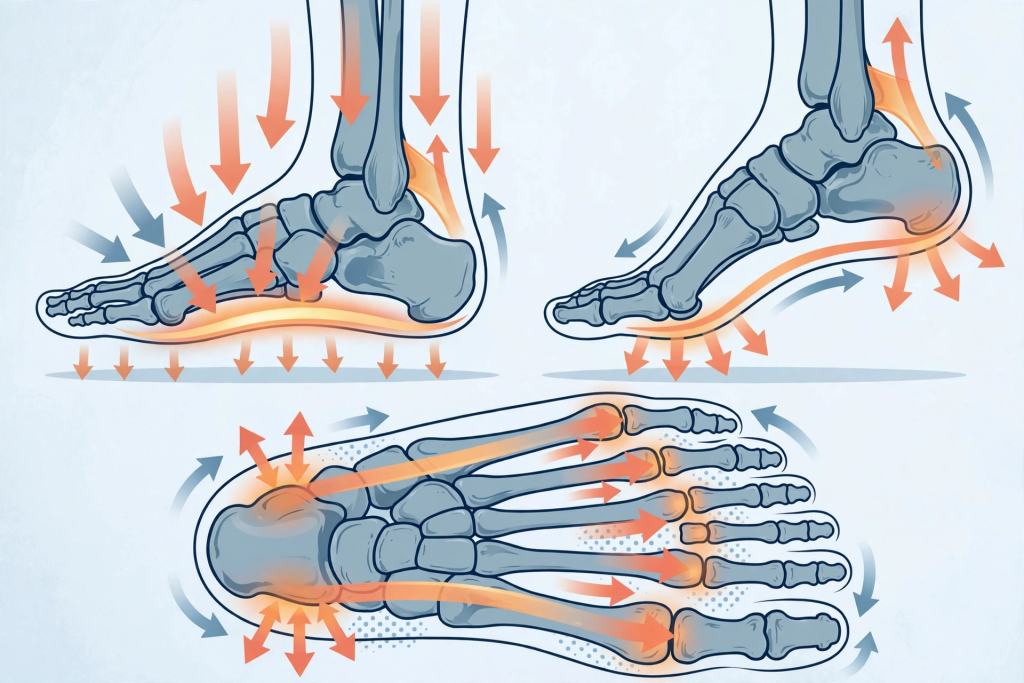
Many people assume that foot pain will improve with a few days of rest, better shoes, or over-the-counter inserts. While that works for minor strains, pain that keeps returning often has a deeper cause.
Rest often fails to resolve persistent foot pain because it typically stems from mechanical overload, abnormal foot structure, or altered biomechanics, rather than simple inflammation. While rest can temporarily calm irritated tissues, the underlying abnormal forces return with activity, causing symptoms to recur. Seattle Foot and Ankle Center, through Dr. J. John Hoy, emphasizes a comprehensive biomechanical evaluation to identify these root causes, as many patients are told they have "foot pain" without understanding its origin.
Persistent foot pain after rest frequently results from mechanical overload, abnormal foot structure, or altered biomechanics—not simply inflammation. Until the underlying problem is identified, symptoms often continue to return.
At Seattle Foot and Ankle Center, Dr. J. John Hoy performs a comprehensive biomechanical evaluation to identify why your foot hurts, not just where it hurts. Treatment is directed at correcting the underlying cause whenever possible, helping patients return to walking, work, exercise, and sports with less pain and a lower risk of recurrence.
Why Does Foot Pain Keep Coming Back?
Pain is often a warning sign rather than the problem itself.
Every step places force through the bones, joints, tendons, ligaments, muscles, and fascia of your feet. When those forces become abnormal, certain structures become overloaded.
Common reasons include:
- Flat feet
- High arches
- Tight calf muscles
- Bunions
- Hammertoes
- Arthritis
- Previous injuries
- Limb length differences
- Poor biomechanics
- Training errors
- Unsupportive footwear
Rest may temporarily calm irritated tissues, but once activity resumes, the same abnormal forces return.
What Is Mechanical Overload?
Mechanical overload occurs when one part of the foot repeatedly absorbs more stress than it was designed to tolerate.
Over time this may lead to:
- Plantar fasciitis
- Metatarsalgia
- Stress fractures
- Achilles tendinitis
- Peroneal tendon injuries
- Posterior tibial tendon dysfunction
- Sesamoid disorders
- Midfoot arthritis
- Forefoot pain
- Recurrent ankle sprains
The pain is often the result of excessive loading rather than a single injury.
Hidden Structural Problems Often Go Undiagnosed
Many patients are told they have “foot pain” without learning why the pain developed.
Structural abnormalities frequently include:
- Flatfoot deformity
- Cavus (high-arched) feet
- Hallux valgus (bunions)
- Hammertoes
- First-ray instability
- Limited ankle motion
- Joint instability
- Progressive arthritis
These conditions alter how forces travel through the foot with every step.
Rather than treating symptoms alone, identifying the structural problem allows treatment to be directed at the source.
Why Rest, Ice, and Home Remedies Sometimes Fail
Initial home treatment is appropriate for many minor injuries.
However, professional evaluation is recommended when:
- Pain lasts more than several weeks.
- Symptoms repeatedly return after activity.
- Walking becomes difficult.
- Swelling persists.
- You cannot participate in work, exercise, or sports.
- Pain changes the way you walk.
- You have diabetes or poor circulation.
- Pain follows an injury that has not fully recovered.
Persistent pain deserves a diagnosis—not repeated cycles of rest.
Why See a Podiatrist Early?
Foot pain is often fragmented across multiple providers. Patients may receive pain medication, physical therapy, imaging, or referrals without first identifying the underlying mechanical cause.
A comprehensive evaluation by a podiatrist focuses specifically on the foot and ankle, allowing structural abnormalities, biomechanical dysfunction, tendon disorders, arthritis, stress injuries, nerve conditions, and skin or nail conditions to be evaluated together. Establishing the diagnosis early often leads to a more efficient treatment plan and helps avoid unnecessary delays.
What Happens During a Biomechanical Evaluation?
Dr. Hoy performs a comprehensive assessment that may include:
- Medical history
- Physical examination
- Standing alignment evaluation
- Joint motion testing
- Muscle strength testing
- Foot flexibility assessment
- Gait analysis
- Shoe wear evaluation
- Review of previous imaging
- Digital X-rays when appropriate
The goal is to understand why abnormal forces are occurring rather than simply identifying the painful location.
Gait Analysis Helps Identify Abnormal Walking Mechanics
Walking is a complex sequence of movements involving the feet, ankles, knees, hips, and lower back.
Subtle abnormalities may increase stress on certain tissues with every step.
Gait analysis can identify:
- Excessive pronation
- Excessive supination
- Early heel lift
- Limited ankle motion
- Instability
- Abnormal pressure distribution
- Compensation from previous injuries
These findings often explain chronic or recurrent pain that has not responded to rest alone.
How Is Foot and Ankle Treatment Individualized?
Foot and ankle treatment at Seattle Foot and Ankle Center is individualized because it depends on your specific diagnosis and typically begins with conservative care. Recommendations are tailored to your unique condition and may include: Activity modification, supportive footwear, over-the-counter orthotics, custom orthotics when greater control is needed, stretching and strengthening, physical therapy, bracing, anti-inflammatory treatment, Extracorporeal shockwave therapy (ESWT) for appropriate chronic conditions, injection therapy when appropriate, or surgical correction if conservative treatment is unsuccessful or the deformity is advanced. Approximately 80% of patients improve without surgery, making accurate diagnosis the most important first step in personalized care.
Recommendations may include:
- Activity modification
- Supportive footwear
- Over-the-counter orthotics
- Custom orthotics when greater control is needed
- Stretching and strengthening
- Physical therapy
- Bracing
- Anti-inflammatory treatment
- Extracorporeal shockwave therapy (ESWT) for appropriate chronic conditions
- Injection therapy when appropriate
- Surgical correction if conservative treatment is unsuccessful or the deformity is advanced
Approximately 80% of patients improve without surgery, making accurate diagnosis the most important first step.
When Should You Schedule an Evaluation?
Schedule an appointment if:
- Rest is no longer helping.
- Pain keeps returning.
- Walking changes because of discomfort.
- Your activity level is declining.
- You are concerned about a structural foot problem.
- You have diabetes and develop new foot pain.
- Symptoms interfere with work, sports, or daily activities.
Early evaluation often prevents small mechanical problems from becoming larger ones.
Why Patients Choose Seattle Foot and Ankle Center
Seattle Foot and Ankle Center provides comprehensive evaluation and treatment of both common and complex foot problems.
Dr. J. John Hoy emphasizes identifying the underlying biomechanical or structural cause of pain rather than simply treating symptoms. Conservative treatment is recommended whenever appropriate, with surgery reserved for patients who truly need it.
Whether your pain involves the heel, arch, forefoot, tendons, joints, or toes, the goal is to restore function, reduce pain, and help prevent recurrence.
Frequently Asked Questions
Persistent pain after rest often indicates an underlying biomechanical or structural problem rather than temporary inflammation. Mechanical overload, tendon disorders, arthritis, stress fractures, or abnormal foot alignment may require professional evaluation.
If foot pain lasts more than a few weeks, repeatedly returns after activity, changes the way you walk, or limits work or exercise, evaluation by a podiatrist is appropriate.
A biomechanical evaluation examines how your feet function while standing and walking. It helps identify abnormal loading patterns, structural deformities, and movement problems that contribute to chronic foot pain.
No. Many patients improve with supportive shoes and quality over-the-counter orthotics. Custom orthotics are recommended when additional control or correction is needed based on your specific foot mechanics.
No. Most patients improve with conservative treatment. Surgery is considered only when non-surgical options have not provided adequate relief or when structural deformity requires correction.
In pain? Don’t wait. Early treatment leads to faster recovery. Urgent appointments available. Read about Conditions We Treat. Request an Appointment online. Call: 206-682-8741 or Contact Us. If you like our content, please link it to your website and Collaborate With Us. Thank you.