
Understanding the Real Cause of Bunions—and When to See a Seattle Podiatrist
If you’ve noticed a bump developing at the base of your big toe, you’re not alone. Bunions are one of the most common foot deformities, affecting millions of adults. While many people assume bunions are simply caused by wearing tight shoes, the reality is much more complex.
A bunion (hallux valgus) is a progressive structural deformity of the foot. Shoes may aggravate symptoms, but they are usually not the primary cause. Understanding why bunions develop can help you reduce discomfort, slow progression, and know when it’s time to seek treatment.
At Seattle Foot and Ankle Center, Dr. J. John Hoy evaluates not only the bunion itself but also the underlying biomechanics and structural factors contributing to the deformity. Identifying these issues early often allows more conservative treatment options and helps patients make informed decisions about their care.
What Is a Bunion?
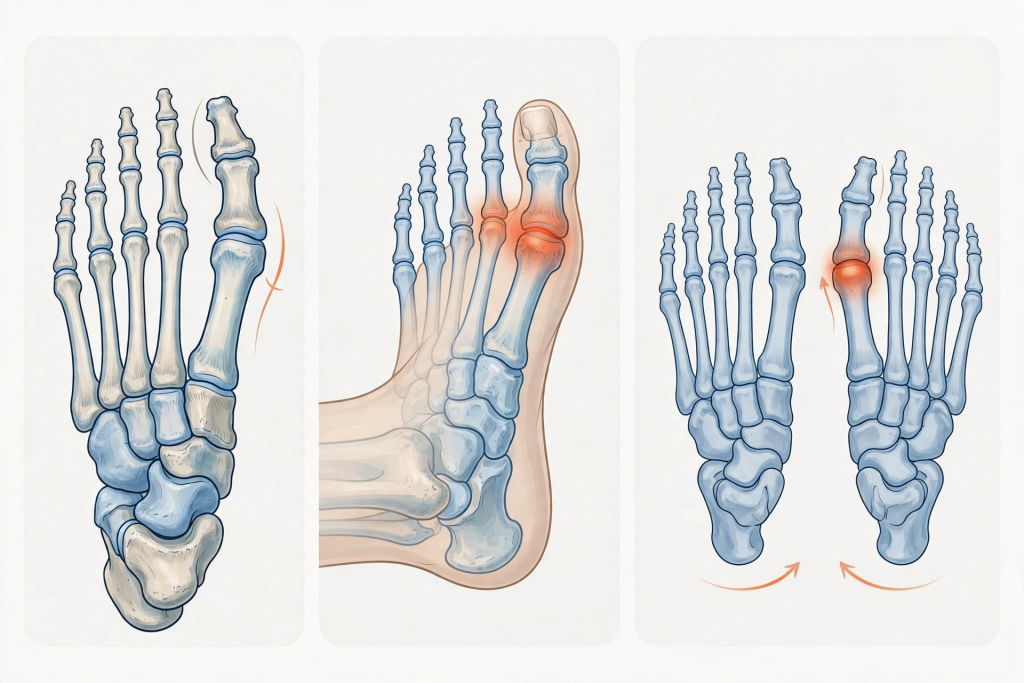
A bunion is a deformity of the joint at the base of the big toe (the first metatarsophalangeal joint). As the condition progresses, the first metatarsal gradually shifts inward while the big toe drifts toward the second toe.
This creates the familiar prominence on the inside of the foot.
Over time, a bunion may cause:
- Pain over the joint
- Redness and swelling
- Difficulty fitting into shoes
- Corns or calluses
- Second-toe pain
- Crossover toe deformity
- Arthritis of the big toe joint
- Reduced walking comfort
Not every bunion is painful, but most enlarge gradually over time.
What Causes Bunions?
Bunions usually develop because of inherited foot structure combined with years of mechanical stress.
Several factors increase the likelihood of developing a bunion.
Genetics
Family history is one of the strongest risk factors.
If one or both parents have bunions, you are more likely to develop them because you inherit the shape and mechanics of your feet—not the bunion itself.
Foot Mechanics
Abnormal biomechanics can place excessive forces across the first ray and the big toe joint.
Examples include:
- Flat feet
- Flexible foot structure
- Instability of the first ray
- Tight calf muscles
- Excessive pronation
- Generalized ligament laxity
These mechanical factors allow the deformity to slowly progress over many years.
Shoes
Shoes do not usually cause bunions by themselves.
However, narrow toe boxes and high heels can increase pressure on an existing deformity, making symptoms worse and sometimes accelerating progression.
Choosing footwear with adequate toe room can significantly improve comfort.
Arthritis and Other Conditions
Certain inflammatory conditions, including rheumatoid arthritis, can contribute to bunion formation or worsen existing deformities.
Previous injuries and neuromuscular disorders may also alter foot mechanics.
Can Bunions Be Prevented?
While genetics cannot be changed, there are several ways to reduce stress on the foot and potentially slow progression.
Wear Shoes That Fit
Look for shoes with:
- A wide toe box
- Low heels
- Good arch support
- Stable construction
Avoid shoes that compress the front of the foot.
Address Biomechanical Problems Early
Many people develop bunions gradually because abnormal foot mechanics are never evaluated.
A comprehensive biomechanical examination can identify issues such as excessive pronation, instability, or abnormal loading before they create larger problems.
Supportive footwear, stretching, strengthening, or orthotic devices may reduce stress across the joint.
Maintain Foot Strength and Flexibility
Regular stretching of the calf muscles and exercises that maintain motion of the big toe may improve function and comfort.
Although exercises cannot reverse a bunion, they may help maintain mobility and reduce stiffness.
When Should You See a Podiatrist?
Many patients wait until a bunion becomes severely painful before seeking care.
Earlier evaluation often provides more treatment options.
Consider scheduling an evaluation if you notice:
- Increasing pain
- Progressive deformity
- Difficulty finding comfortable shoes
- Corns between the toes
- Second-toe pain
- Difficulty walking
- Loss of motion in the big toe
- Recurrent inflammation
A bunion that changes your walking pattern may also contribute to pain elsewhere in the foot, ankle, knee, hip, or lower back.
Why a Precise Diagnosis Matters
Not every bump on the side of the foot is a bunion.
Conditions that may resemble or accompany bunions include:
- Arthritis of the big toe
- Hallux rigidus
- Ganglion cysts
- Gout
- Sesamoid disorders
- Bursitis
- Soft tissue masses
An accurate diagnosis helps ensure that treatment is directed toward the actual problem.
Don’t Let Your Care Become Fragmented
Many patients begin with shoe changes, over-the-counter inserts, internet advice, or treatment focused only on pain relief. Others are referred for imaging, physical therapy, or other services before the underlying foot deformity is fully evaluated.
Because bunions are structural conditions, a comprehensive podiatric evaluation early in the process can help determine whether symptoms are being caused by the bunion itself, arthritis, instability, tendon problems, or another foot disorder. Establishing the diagnosis first often leads to a more coordinated treatment plan and helps avoid unnecessary delays.
Conservative Treatment Comes First
Most bunions do not require immediate surgery.
Treatment may include:
- Shoe modifications
- Padding
- Activity modification
- Anti-inflammatory measures
- Stretching
- Supportive footwear
- Over-the-counter orthotics
- Custom orthotics when additional control is needed
- Corticosteroid injections for selected inflammatory conditions
The goal is to reduce pain, improve function, and slow progression whenever possible.
When Is Surgery Considered?
Surgery is generally considered when:
- Pain limits daily activities.
- Conservative treatment no longer provides relief.
- The deformity continues to progress.
- Adjacent toes are becoming involved.
- Walking becomes increasingly difficult.
The type of procedure depends on the severity of the deformity, joint condition, bone alignment, and your overall health and activity level.
No single bunion operation is appropriate for every patient.
Why Choose Seattle Foot and Ankle Center?
Dr. J. John Hoy has extensive experience evaluating and treating bunions and other structural foot deformities.
Every evaluation begins with determining why the bunion developed. By understanding your foot mechanics, alignment, and overall function, treatment can be tailored to your individual needs. Conservative care is recommended whenever appropriate, with surgery reserved for patients who are most likely to benefit.
Whether your goal is walking comfortably, remaining active, or discussing surgical options, treatment begins with a thorough diagnosis.
Frequently Asked Questions
Most bunions develop because of inherited foot structure combined with years of abnormal mechanical loading. Shoes may worsen symptoms but usually are not the primary cause.
You cannot change your genetics, but wearing properly fitting shoes, maintaining good foot mechanics, and addressing biomechanical problems early may help slow progression.
No. Some bunions cause little discomfort, while others become painful because of pressure, inflammation, arthritis, or changes in walking mechanics.
No. Orthotics cannot reverse a bunion, but they may reduce abnormal mechanical stress, improve comfort, and help slow progression in selected patients.
Surgery is generally considered when pain persists despite conservative treatment or when the deformity significantly interferes with walking, work, or daily activities.
Schedule a Comprehensive Bunion Evaluation in Seattle
If you’re experiencing bunion pain, difficulty finding comfortable shoes, or progressive toe deformity, don’t wait until the problem becomes severe.
A comprehensive evaluation can determine whether your symptoms are caused by a bunion alone or whether other conditions are contributing to your discomfort. Early diagnosis often leads to more treatment options and a clearer plan for long-term foot health.
Schedule an appointment with Dr. J. John Hoy at Seattle Foot and Ankle Center to receive a personalized evaluation and treatment plan designed around your goals.
In pain? Don’t wait. Early treatment leads to faster recovery. Urgent appointments available. Read about Conditions We Treat. Request an Appointment online. Call: 206-682-8741 or Contact Us. Refer a Patient. If you like our content, please link it to your website. Thank you.