
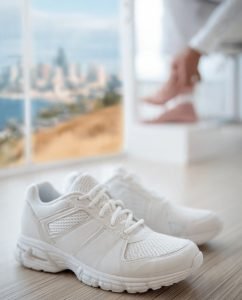
Heel pain is one of the most common reasons patients visit a podiatrist—and one of the most preventable. At Seattle Foot and Ankle Center, Dr. J. John Hoy regularly sees patients whose pain is directly linked to the shoes they wear every day.
Whether you’re walking hills in Seattle, standing long hours at work, or running around Green Lake, the right footwear can make a major difference in reducing heel pain and preventing conditions like plantar fasciitis.
Below are practical, podiatrist-approved footwear tips to help you stay comfortable and active.
Why footwear matters for heel pain
Heel pain often develops when repeated stress is placed on the plantar fascia, Achilles tendon, or heel bone. Poor footwear can increase that strain by offering:
- Insufficient arch support
- Thin or worn-out soles
- Poor shock absorption
- Improper heel alignment
Over time, this leads to inflammation, micro-tears, and chronic pain—especially with activities like walking, running, or standing for long periods.
1. Choose shoes with proper arch support
Arch support is one of the most important factors in preventing and reducing heel pain.
Look for shoes that:
- Match your foot arch (low, neutral, or high)
- Support the midfoot without collapsing
- Keep your heel aligned during walking
Flat, unsupportive shoes (like worn sneakers or minimalist shoes) often worsen symptoms of plantar fasciitis and heel strain.
2. Prioritize cushioning in the heel
Good heel cushioning helps absorb impact every time your foot hits the ground.
When selecting shoes, check for:
- A soft, shock-absorbing heel
- Slight heel elevation (not completely flat)
- Responsive midsole foam
This is especially important if you spend long hours walking on hard Seattle sidewalks or standing at work.
3. Replace worn-out shoes regularly
Even high-quality shoes lose support over time.
As a general rule:
- Running shoes: replace every 300–500 miles
- Walking shoes: replace every 6–12 months (depending on use)
Worn soles can no longer absorb shock properly, which often leads to recurring heel pain.
4. Avoid completely flat shoes and unsupportive footwear
Shoes without structure—such as flip-flops, ballet flats, or worn-out casual shoes—can significantly increase heel strain.
These types of footwear often:
- Provide no arch support
- Increase tension on the plantar fascia
- Reduce shock absorption
If heel pain is already present, these shoes can make recovery slower.
5. Consider orthotics for personalized support
If over-the-counter shoes aren’t enough, custom or prefabricated orthotics may help.
Orthotics can:
- Improve foot alignment
- Reduce pressure on the heel
- Support the arch more effectively
- Decrease strain during walking or running
A podiatric evaluation helps determine whether orthotics are appropriate for your condition.
6. Match shoes to your activity
Different activities place different demands on your feet:
- Running: requires shock absorption and stability
- Walking: needs comfort and arch support
- Work/standing: needs cushioning and durability
- Hiking: requires stability and heel protection
Using the wrong shoe for the activity is a common cause of recurring heel pain.
When to see a Seattle podiatrist for heel pain
Footwear adjustments can help, but persistent pain may indicate an underlying condition such as:
- Plantar fasciitis
- Heel spur syndrome
- Achilles tendinitis
- Nerve irritation
If your heel pain lasts more than 1–2 weeks, keeps returning, or affects your daily activity, it’s time for a professional evaluation.
At Seattle Foot and Ankle Center, Dr. J. John Hoy provides targeted diagnosis and treatment plans designed to address the root cause—not just symptoms.
Final thoughts
The right shoes are one of the simplest and most effective ways to reduce heel pain—but they aren’t always the complete solution. If discomfort continues, expert evaluation can help prevent long-term issues and get you back to walking, running, and living comfortably.
Book an appointment
If you’re struggling with heel pain in Seattle, schedule a visit with Seattle Foot and Ankle Center and Dr. J. John Hoy today. Early treatment leads to faster recovery and better long-term outcomes.
In pain? Don’t wait. Early treatment leads to faster recovery. Urgent appointments available. Read about Conditions We Treat. Request an Appointment online. Call: 206-682-8741 or Contact Us. Refer a Patient. If you like our content, please link it to your website. Thank you.