
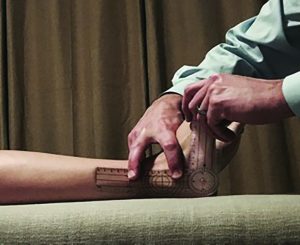
 One example of abnormal gait in children is toe walking, or equinus. We consider the angle of the ankle joint bringing the foot up, called dorsiflexion, with the subtalar joint, the joint below the ankle joint, at a neutral position. The expected value at birth is 75 degrees of dorsiflexion with no functional limitations. As the child ages, this value will decrease to approximately 20 to 25 degrees of dorsiflexion at age three, approximately 10 to 15 degrees of dorsiflexion at age 10 to 15 and approximately 10 degrees at age 15, which is akin to that of an adult.
Toe walking, also known as equinus, is an abnormal gait in children where they walk on their toes, which can stem from various causes including congenital factors, bone block issues, or conditions like cerebral palsy and muscular dystrophy. If toe walking persists beyond five years of age, it often signals an underlying neurological cause requiring evaluation, and prolonged toe walking can lead to complications such as Sever’s disease due to excessive pull on the heel bone growth plate. Treatments for toe walking, offered by specialists like Dr. John Hoy at Seattle Foot and Ankle Center, range from stretching programs and orthotic management to casting and, in severe cases, surgery.
There are several different types of toe walking, including:
- Congenital gastrocnemius-soleus equinus exhibits limited dorsiflexion with the knee flexed and a spongy feel at the end range of motion.
- Bone block equinus, which has a distinct hard stop due to the abutment of the talus on the tibia.
- Spastic equinus is common in patients with cerebral palsy and hyperkinesia.
There may be other causes of toe walking including cerebral palsy, muscular dystrophy, hereditary equinus, talipes equinovarus and cavus foot deformity. When toe walking exceeds five years, there is likely a neurological cause that needs evaluation and treatment. Prolonged toe walking can occur in children with cognitive delay.
Toe walking can cause Sever’s disease, due to the excessive pull on the heel bone growth plate, called the calcaneal apophysis, in the growing child.
Treatments for toe walking include a stretching program, casting in the most severe of cases, orthotic management and surgery. A team of healthcare providers involving physical therapy, occupational therapists and neurologists is often helpful.
Dr. John Hoy is a specialist in pediatric foot care in Seattle, Washington, at the Seattle Foot and Ankle Center.
Gait Abnormalities from Chicago Health SMB Brands on Vimeo.
In pain? Don’t wait. Early treatment leads to faster recovery. Urgent appointments available. Read about Conditions We Treat. Request an Appointment online. Call: 206-682-8741 or Contact Us. If you like our content, please link it to your website and Collaborate With Us. Thank you.