
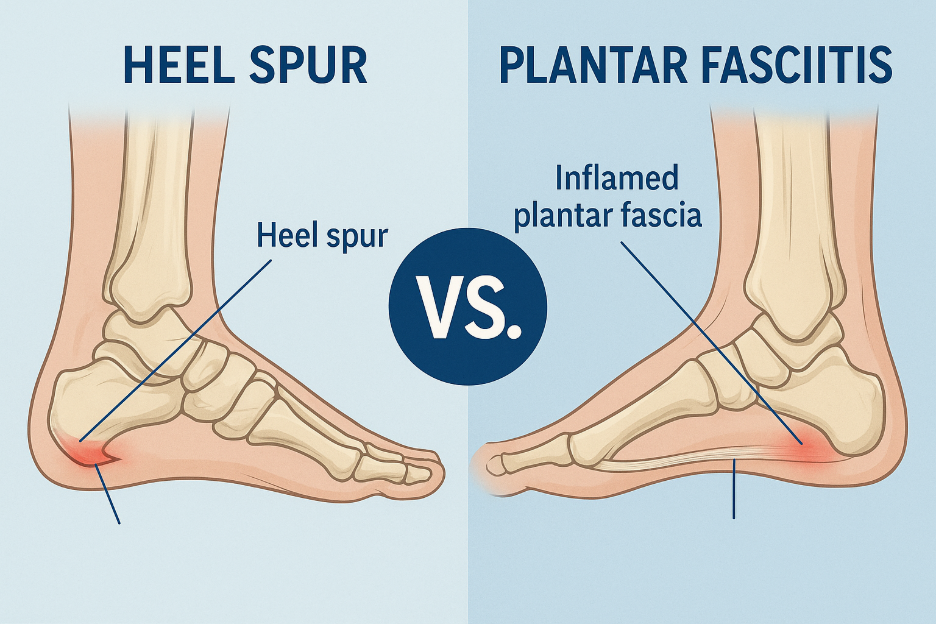
If you’re dealing with persistent heel pain, you’re not alone. Two of the most common causes are plantar fasciitis and heel spurs—conditions that are often confused but require different approaches to treatment. At Seattle Foot and Ankle Center, Dr. J. John Hoy helps patients understand the root of their pain and get back on their feet quickly.
Let’s break down the key differences between plantar fasciitis and heel spurs so you can better understand your symptoms—and when to seek professional care.
What Is Plantar Fasciitis?
Plantar fasciitis is an inflammation of the plantar fascia, a thick band of tissue that runs along the bottom of your foot, connecting your heel bone to your toes. This structure supports your arch and absorbs shock when you walk.
Common Symptoms:
- Sharp, stabbing pain in the heel (especially with your first steps in the morning)
- Pain that improves with movement but returns after long periods of standing
- Tenderness along the arch of the foot
Causes:
- Overuse (running, walking, standing for long hours)
- Flat feet or high arches
- Poor footwear support
- Tight calf muscles
What Is a Heel Spur?
A heel spur is a calcium deposit that causes a bony protrusion on the underside of the heel bone. Unlike plantar fasciitis, heel spurs themselves don’t always cause pain.
Key Facts:
- Heel spurs often develop over time due to chronic strain on foot muscles and ligaments
- Many people have heel spurs without any symptoms
- Pain typically occurs when a heel spur is associated with plantar fasciitis
Plantar Fasciitis vs. Heel Spur: The Key Differences
| Feature | Plantar Fasciitis | Heel Spur |
|---|---|---|
| Type of Condition | Soft tissue inflammation | Bone growth |
| Pain Source | Inflamed plantar fascia | Often painless (unless combined with inflammation) |
| Onset | Sudden or gradual | Develops over time |
| Diagnosis | Clinical exam | X-ray imaging |
| Treatment Focus | Reducing inflammation | Addressing underlying strain |
How Are They Related?
Here’s where the confusion comes in: plantar fasciitis and heel spurs often occur together.
Chronic tension and inflammation in the plantar fascia can lead to the formation of a heel spur over time. However, the pain most people feel is usually from the inflamed tissue—not the spur itself.
Treatment Options
At Seattle Foot and Ankle Center, treatment is tailored to the specific cause of your heel pain.
For Plantar Fasciitis:
- Stretching exercises (especially for calves and arches)
- Custom orthotics
- Anti-inflammatory medications
- Physical therapy
- Night splints
For Heel Spurs:
- Orthotic support to reduce pressure
- Footwear modifications
- Addressing biomechanical issues
- Rarely, surgical intervention if conservative treatments fail
When Should You See a Specialist?
If your heel pain lasts more than a few weeks, worsens, or interferes with daily activities, it’s time to seek expert care. Early diagnosis can prevent chronic issues and speed up recovery.
Dr. J. John Hoy and the team at Seattle Foot and Ankle Center specialize in diagnosing and treating heel pain conditions with personalized, evidence-based care.
Take the Next Step Toward Pain Relief
Heel pain doesn’t have to control your life. Whether you’re dealing with plantar fasciitis, a heel spur, or both, understanding the difference is the first step toward effective treatment.
Schedule a consultation with Seattle Foot and Ankle Center today and get back to walking comfortably again.
In pain? Don’t wait. Early treatment leads to faster recovery. Urgent appointments available. Read about Conditions We Treat. Request an Appointment online. Call: 206-682-8741 or Contact Us. Refer a Patient. If you like our content, please link it to your website. Thank you.