
Heel pain can be more than just a nuisance—it can interfere with your daily activities, exercise routine, and overall quality of life. One of the most common causes of heel pain is plantar fasciitis, a condition affecting millions of Americans each year.
In this guide, we’ll walk you through the symptoms, how it’s diagnosed, and the most effective treatment options available—so you can take the first step toward relief.
What Is Plantar Fasciitis?
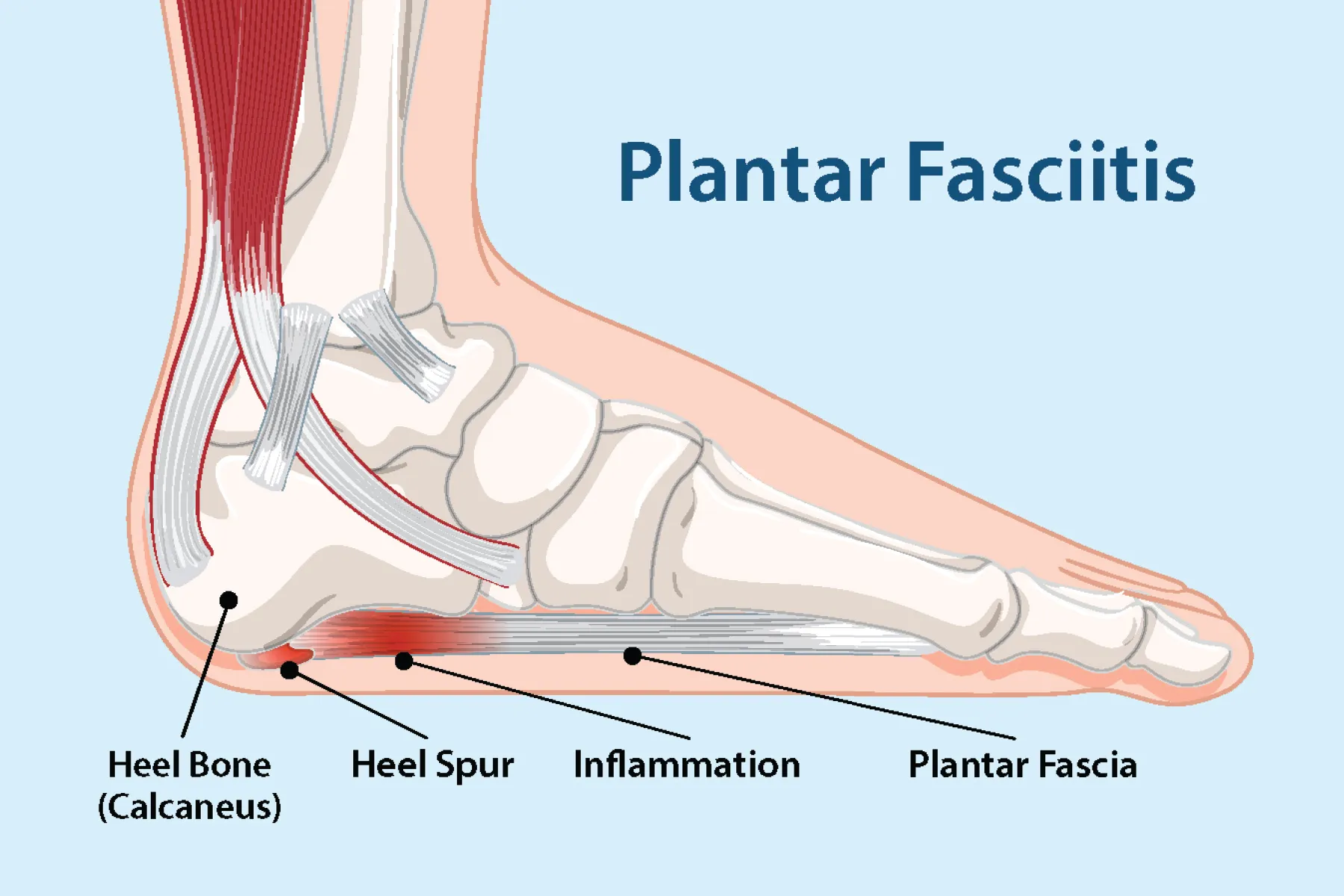
Plantar fasciitis is an inflammatory (or degenerative) condition involving the plantar fascia, a thick band of tissue that runs along the bottom of your foot from your heel to your toes. This structure supports your arch and absorbs shock when you walk.
When excessive strain causes small tears in the fascia, it leads to irritation, inflammation, and pain.
Common Symptoms of Plantar Fasciitis
The hallmark symptom of plantar fasciitis is heel pain, but the pattern of pain is what makes it distinctive.
Key Signs to Watch For:
- Sharp, stabbing pain in the heel
- Pain with the first steps in the morning (often the most intense)
- Discomfort after long periods of sitting or rest
- Pain that improves with movement but may worsen later in the day
- Tenderness along the bottom of the foot, especially near the heel
Many patients describe it as a “bruised” or “knife-like” pain when they first stand up.
What Causes Plantar Fasciitis?
Plantar fasciitis is typically caused by repetitive strain and overuse.
Common Risk Factors:
- Sudden increase in activity (running, walking, or standing)
- Prolonged standing (common in certain professions)
- Flat feet or high arches
- Tight Achilles tendon or calf muscles
- Obesity or weight gain
- Poorly supportive footwear
How Is Plantar Fasciitis Diagnosed?
At Seattle Foot and Ankle Center, diagnosis begins with a thorough clinical evaluation.
1. Medical History
Your doctor will ask about:
- When your pain started
- Activity levels and occupation
- Footwear habits
- Timing and pattern of symptoms
2. Physical Examination
A focused exam will check for:
- Tenderness at the heel (especially the medial calcaneal area)
- Pain when stretching the plantar fascia
- Tightness in the Achilles tendon
3. Imaging (If Needed)
In most cases, imaging is not required. However, X-rays or MRI may be used to rule out:
- Stress fractures
- Nerve entrapment
- Other causes of heel pain
Effective Treatment Options
The good news: Most patients improve with conservative, non-surgical treatment within a few months.
Conservative Treatments
1. Stretching & Physical Therapy
- Stretching the plantar fascia and Achilles tendon
- Strengthening lower leg muscles
- Guided physical therapy programs
These are often the cornerstone of recovery.
2. Activity Modification
- Reduce high-impact activities (running, jumping)
- Switch to low-impact exercises like swimming or cycling
3. Supportive Footwear & Orthotics
- Proper arch support reduces strain on the fascia
- Custom orthotics may be recommended
4. Ice and Anti-Inflammatories
- Ice helps reduce inflammation
- NSAIDs like ibuprofen or naproxen can relieve pain
5. Night Splints
- Keep the plantar fascia stretched overnight
- Reduce morning pain
Advanced Treatments (If Symptoms Persist)
If conservative care doesn’t provide relief, additional options may include:
- Corticosteroid injections for inflammation
- Custom bracing or immobilization
- Extracorporeal shockwave therapy (ESWT) to stimulate healing
- Surgical intervention (rare, and only for severe cases)
When Should You See a Specialist?
You should consult a foot and ankle specialist if:
- Pain lasts longer than a few weeks
- Symptoms are worsening
- You have difficulty walking or standing
- Home treatments are not helping
Early diagnosis and treatment can prevent chronic pain and long-term complications.
Take the First Step Toward Relief
Plantar fasciitis is highly treatable—but early intervention is key. At Seattle Foot and Ankle Center, Dr. J. John Hoy provides personalized, evidence-based care to help patients return to pain-free movement as quickly as possible.
If you’re experiencing heel pain, don’t wait. A proper diagnosis and targeted treatment plan can make all the difference.
Schedule Your Consultation Today
Your feet carry you through life—let’s keep them healthy, strong, and pain-free.
In pain? Don’t wait. Early treatment leads to faster recovery. Urgent appointments available. Read about Conditions We Treat. Request an Appointment online. Call: 206-682-8741 or Contact Us. Refer a Patient. If you like our content, please link it to your website. Thank you.