
What Causes Ball of Foot Pain, Toe Instability, and Forefoot Deformity in Seattle?
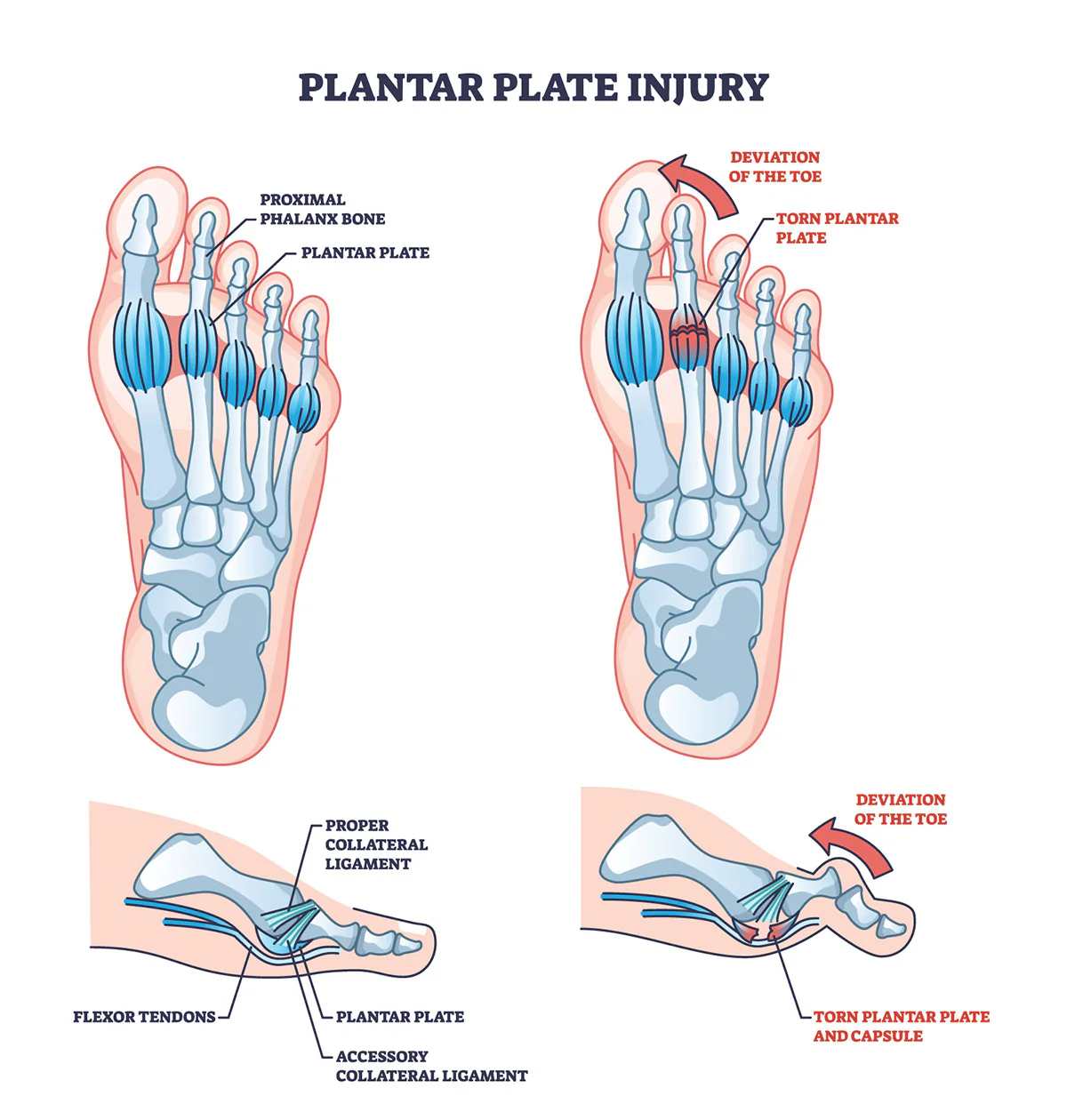
Persistent pain in the ball of the foot is often diagnosed as metatarsalgia—but in many cases, the real problem is a plantar plate tear.
A plantar plate tear is a structural ligament injury beneath the toe joint, most commonly affecting the second toe. These injuries are often missed early and may worsen over time, leading to toe drifting, crossover deformity, joint instability, and chronic forefoot pain.
At Seattle Foot and Ankle Center, Dr. J. John Hoy provides specialized diagnosis and treatment for plantar plate injuries, including conservative care, biomechanical treatment, and surgical repair when necessary.
If ball-of-foot pain is not improving, early evaluation matters.
Schedule an Evaluation or call 206-682-8741
What Is a Plantar Plate Tear?
The plantar plate is a thick ligament structure under the metatarsophalangeal (MTP) joint that helps stabilize the toe and prevent it from drifting upward.
When it becomes stretched, partially torn, or ruptured, patients may develop:
- Pain under the ball of the foot
- Swelling at the base of the toe
- A feeling of walking on a pebble
- Toe separation or drifting
- Crossover toe deformity
- Joint instability
- Difficulty pushing off when walking
These injuries often worsen gradually and may be mistaken for simple inflammation.
When Ball of Foot Pain Isn’t Improving
Many patients with plantar plate injuries are first treated as:
- Metatarsalgia
- Neuroma
- Capsulitis
- Tendonitis
- Overuse injuries
Some are referred to physical therapy or receive repeated injections without recognizing the structural ligament injury underneath.
If pain keeps returning, the toe is drifting, or walking remains painful, the problem may need a foot-specialist evaluation.
Early diagnosis may help prevent progressive deformity.
What Causes a Plantar Plate Tear?
Common causes include:
- Overload of the forefoot
- Long second metatarsal
- Bunion deformity
- Tight calf muscles
- Sports injuries
- Repetitive impact
- High heels
- Forefoot instability
These tears are often mechanical problems, not simply inflammation.
That is why biomechanical evaluation matters.
How Plantar Plate Tears Are Diagnosed
At Seattle Foot and Ankle Center, diagnosis begins with:
Foot structure evaluation
At Seattle Foot and Ankle Center, plantar plate tears are diagnosed through a comprehensive process that begins with:
Digital X-rays
Weight-bearing imaging may show joint deviation, toe drift, or metatarsal overload.
Clinical stress testing
Helps evaluate plantar plate integrity.
Advanced imaging when necessary
MRI or ultrasound may be used in select cases.
Accurate diagnosis is critical because untreated tears often progress.
Conservative Treatment for Plantar Plate Tears
Not every plantar plate tear needs surgery.
Treatment may include:
- Offloading pads
- Taping or splinting
- Custom orthotics
- Shoe modifications
- Activity modification
- Immobilization
- Anti-inflammatory care
Early treatment often improves outcomes.
When Surgery May Be Needed
Surgery may be recommended if:
- The tear is advanced
- The toe is drifting or crossing
- Conservative treatment fails
- Joint instability persists
- Pain limits walking or activity
Surgical options may include:
- Plantar plate repair
- Weil osteotomy
- Toe realignment
- Tendon balancing
- Forefoot reconstruction
The goal is to restore stability, reduce pain, and prevent worsening deformity.
Why Early Foot Specialist Evaluation Matters
Plantar plate tears are one of the most commonly missed causes of chronic forefoot pain.
Delayed diagnosis may lead to:
- Progressive toe deformity
- Chronic metatarsalgia
- Joint dislocation
- Difficulty fitting shoes
- More complex surgery later
If ball-of-foot pain is not improving—or if your toe is starting to drift—early evaluation may help preserve simpler treatment options.
At Seattle Foot and Ankle Center, Dr. J. John Hoy provides both conservative and surgical treatment for plantar plate injuries and other forefoot conditions.
Schedule your plantar plate evaluation today.
In pain? Don’t wait. Early treatment leads to faster recovery. Urgent appointments available. Read about Conditions We Treat. Request an Appointment online. Call: 206-682-8741 or Contact Us. If you like our content, please link it to your website and Collaborate With Us. Thank you.