
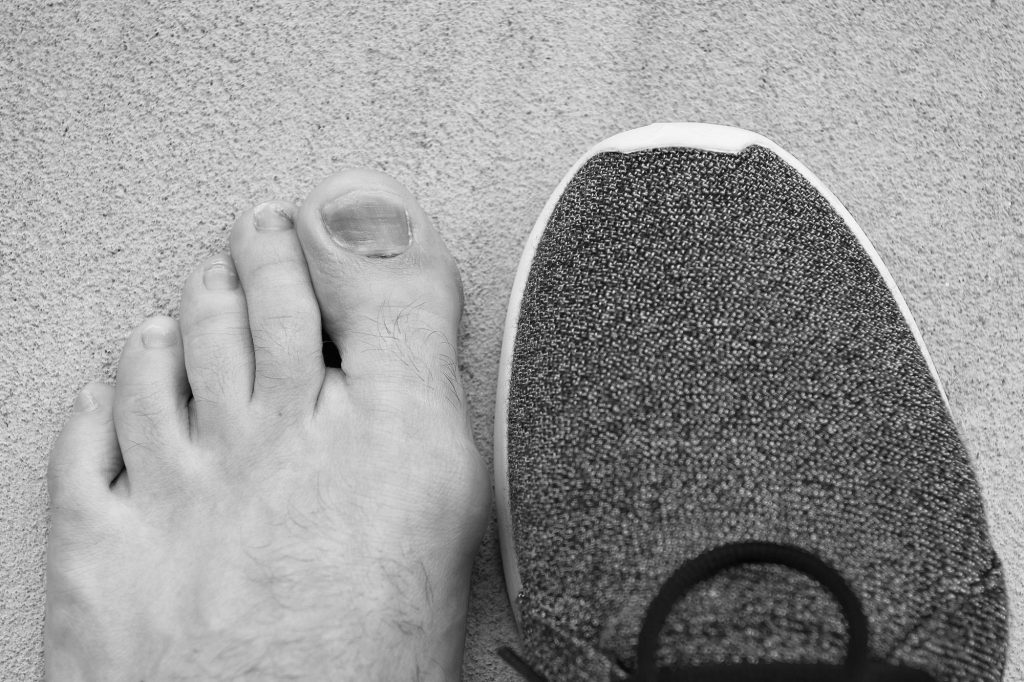
Your pinky toe is small, but problems involving the fifth toe can have a surprisingly large effect on how you walk.
A painful fifth toe may rub against your shoe, develop a corn or callus, become increasingly crooked, or hurt whenever you push off while walking. If you start avoiding pressure on that toe, you may unconsciously change your gait.
That change in walking pattern is often more important than the size of the original problem.
Persistent fifth-toe pain should not automatically be dismissed as a footwear problem. Sometimes it reflects a structural or biomechanical issue that needs to be identified and treated.
Why a Small Toe Problem Can Change the Way You Walk
When something hurts, the body naturally tries to protect it.
If your pinky toe is painful, you may shift your weight toward the inside or outside of the foot, shorten your stride, rotate the foot differently, or avoid pushing off normally. You may not even realize you are doing it.
Over time, repeatedly walking this way can place additional stress on other parts of the foot and lower extremity.
The important question is therefore not simply:
“Why does my pinky toe hurt?”
It is also:
“Why is my foot putting so much stress on this toe?”
Signs Your Fifth Toe Problem Deserves an Evaluation
Persistent pain
Pain that continues despite changing shoes, reducing activity, or giving the toe time to recover deserves attention.
Pain that repeatedly returns when you resume normal activity is particularly useful information. It may suggest that the underlying cause has not been addressed.
A change in your walking pattern
If you are limping, avoiding the outside of the foot, shortening your stride, or consciously protecting the toe, don’t ignore it.
A change in gait means the problem is affecting function—not simply causing an isolated spot of discomfort.
Corns and calluses
A corn or callus is often a clue about repeated pressure or friction.
Simply removing the thickened skin may provide temporary relief, but if the mechanical pressure remains, the corn or callus may return.
The location and pattern of the callus can help identify where abnormal pressure is occurring.
A crooked or curled fifth toe
The fifth toe may develop a hammertoe, adductovarus deformity, or another structural change. As the toe changes position, it may have less room inside the shoe and become increasingly vulnerable to rubbing and pressure.
A painful bump near the fifth metatarsal
Not every “bunion” is a traditional big-toe bunion.
A tailor’s bunion, also called a bunionette, involves prominence near the outside of the forefoot at the fifth metatarsal. It can increase shoe pressure and contribute to irritation around the little toe.
Burning, tingling, or numbness
Pain is not always mechanical.
Burning, tingling, numbness, or unusual sensitivity can suggest nerve involvement and may require a different diagnostic approach.
What Can Cause Fifth Toe Pain?
There are several possible explanations, and more than one can exist at the same time.
Foot structure and biomechanics
The shape and alignment of the forefoot influence how pressure is distributed during walking.
A bunionette, toe deformity, high arch, flatfoot, or other structural characteristic can increase pressure along the outside of the foot or around the fifth toe.
Shoes
Narrow or pointed shoes can compress the fifth toe and aggravate an existing deformity.
Changing to a wider toe box may help—but if the problem continues even in appropriate footwear, footwear may not be the entire explanation.
Repetitive activity
Running, hiking, prolonged walking, standing, and other activities can repeatedly load the forefoot.
A problem that appears only after a certain amount of activity can provide an important clue about the underlying mechanics.
Tendon or soft-tissue problems
The tendons and soft tissues around the forefoot contribute to toe position and function. An injury or dysfunction affecting these structures can sometimes contribute to persistent symptoms.
Nerve-related pain
Nerve irritation can produce burning, tingling, shooting pain, or altered sensation. These symptoms should not automatically be attributed to a corn, callus, or shoe pressure.
When Home Care Is Reasonable—and When It Isn’t
For a mild, recent problem, simple measures may be reasonable.
You can try:
- Wearing shoes with a wider toe box
- Reducing activities that clearly aggravate the toe
- Using appropriate padding to reduce friction
- Monitoring whether symptoms improve with these changes
But home care should not become an endless cycle.
If the pain persists, keeps returning, progressively worsens, or begins changing the way you walk, it is reasonable to have the foot examined.
The goal is not simply to remove a corn or tell you to buy a larger shoe. The goal is to determine why the pressure is occurring in the first place.
What a Podiatrist Can Look For
A comprehensive evaluation can identify factors that may not be obvious when looking only at the painful toe.
Dr. J. John Hoy may assess:
- The alignment and structure of the foot
- Fifth-toe position and deformity
- The fifth metatarsal and surrounding structures
- Joint motion
- Tendon and muscle function
- Skin changes such as corns and calluses
- Neurologic findings
- Gait and weight distribution
- Footwear and activity-related factors
Imaging may be appropriate when the examination suggests a structural problem that needs further evaluation.
This approach helps distinguish a simple pressure problem from a condition requiring more specific treatment.
Treatment Depends on the Diagnosis
Treatment should be directed at the cause rather than automatically escalating to a procedure.
Depending on the diagnosis, treatment may include:
- Footwear modification
- Padding or offloading
- Activity modification
- Exercises or rehabilitation
- Orthotics when appropriate
- Treatment of associated tendon or joint problems
- Other conservative measures
- Surgery when a significant structural deformity does not respond adequately to appropriate conservative care
Not every painful pinky toe requires surgery. In many cases, understanding the mechanics and reducing the source of abnormal pressure can make a substantial difference.
Don’t Let a Small Toe Problem Change the Way You Walk
A painful pinky toe may seem like a minor problem, but the moment it starts changing your gait, it is affecting more than just one toe.
If you have persistent fifth-toe pain, recurrent corns or calluses, a progressively crooked toe, a painful bump along the outside of the forefoot, or symptoms that are changing the way you walk, a podiatric evaluation can help determine what is actually happening.
At Seattle Foot and Ankle Center, Dr. J. John Hoy takes a diagnosis-first approach to foot and ankle problems, with conservative treatment used whenever appropriate.
If your pinky toe is changing the way you walk, don’t just keep treating the symptom. Find out why.
Frequently Asked Questions
Pinky toe pain can result from shoe pressure, toe deformity, a bunionette, repetitive activity, structural foot mechanics, tendon or soft-tissue problems, nerve irritation, or other conditions. An examination is needed to determine the specific cause.
Consider an evaluation if pain persists, repeatedly returns, worsens, interferes with walking, or causes you to change your gait. A visible deformity, recurrent corn or callus, swelling, numbness, burning, or other unusual symptoms are additional reasons to seek evaluation.
Yes. Pain can cause you to shift your weight or alter your stride to protect the toe. If that change becomes persistent, it can place additional stress on other parts of the foot and lower extremity.
A bunionette, or tailor’s bunion, is a prominence associated with the fifth metatarsal on the outside of the forefoot. It can increase pressure against footwear and contribute to pain or irritation around the fifth toe.
No. Treatment depends on the diagnosis and severity of the problem. Footwear changes, padding, activity modification, exercises, orthotics, and other conservative measures may be appropriate. Surgery is reserved for selected structural problems when it is medically appropriate.