Achilles tendon pain can make walking, running, hiking, and climbing stairs difficult. Whether your pain started gradually from overuse or suddenly after injury, early diagnosis is important to prevent worsening tendon damage or rupture.
The foot and ankle are an anatomic region, and podiatry is the specialty dedicated to that region. Musculoskeletal conditions of the foot and ankle have long been part of comprehensive podiatric medicine. Podiatrists diagnose and treat these conditions using both conservative and surgical approaches. A foot and ankle physician can first evaluate the problem, establish the diagnosis, and determine the appropriate course of care. When additional expertise is needed, that care can be coordinated as part of the treatment plan.
At Seattle Foot and Ankle Center, Dr. J. John Hoy provides expert diagnosis and treatment for Achilles tendonitis, tendinosis, insertional Achilles pain, partial tears, and Achilles ruptures. It is part of Dr. Hoy’s musculoskeletal foot and ankle medicine practice, focused on physician-level diagnosis and non-surgical treatment before surgery is considered. Treatment may include immobilization, custom orthotics, exercises, extracorporeal shockwave therapy (ESWT), or surgical repair when necessary.
Not all Achilles pain is simple tendonitis. Persistent symptoms may reflect chronic tendon degeneration (tendinosis), a partial tear, bursitis, Haglund’s deformity, inflammatory arthritis, or another condition requiring a different treatment approach. Early evaluation by a foot and ankle physician helps establish the diagnosis and develop an individualized treatment plan before tendon damage progresses.
The Achilles tendon is commonly injured especially after activity such as hiking or basketball. Common disorders include rupture, partial rupture, tendinitis and tendinosis. The latter is more long term and involves scar tissue. Treatments involve protected weight bearing, non-weight bearing, surgery, or extracorporeal shockwave therapy.
What Is the Achilles Tendon?
The Achilles tendon is the strongest tendon in the body. It connects the calf muscles to the heel bone and plays a critical role in walking, running, jumping, and climbing stairs. Because it absorbs significant force during activity, it is highly vulnerable to overuse injuries, degeneration, and rupture.
Achilles tendon disorders are especially common in runners, basketball players, hikers, and active adults.
Common Achilles Tendon Conditions We Treat
Achilles tendonitis (acute inflammation)
Achilles tendinosis (chronic degeneration)
Insertional Achilles tendonitis
Non-insertional Achilles tendinopathy
Partial Achilles tears
Complete Achilles rupture
Retrocalcaneal bursitis
Haglund’s deformity associated with Achilles irritation
Achilles Tendonitis vs Achilles Tendinosis
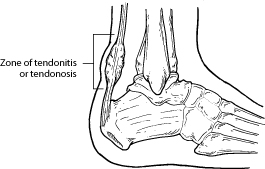
Two common disorders that occur in the heel cord are Achilles tendonitis and Achilles tendonosis.
Achilles tendonitis is usually an acute inflammatory condition caused by sudden overuse or increased activity.
Achilles tendinosis is a chronic degenerative condition where the tendon develops scar tissue, thickening, and microscopic tearing over time.
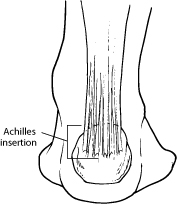
Achilles tendonitis is an inflammation of the Achilles tendon. This inflammation is typically short-lived. Over time, if not resolved, the condition may progress to a degeneration of the tendon (Achilles tendonosis), in which the tendon loses its organized structure and is likely to develop microscopic tears. Sometimes the degeneration involves the site where the Achilles tendon attaches to the heel bone. In rare cases, chronic degeneration with or without pain may result in rupture of the tendon.
This distinction matters because chronic tendinosis often responds differently to treatment and may require regenerative therapies such as shockwave therapy or surgery.
Symptoms of Achilles Tendon Injury
Achilles tendon disorders can cause a range of symptoms depending on whether the tendon is inflamed, degenerative, or partially torn. Common symptoms include:
Pain along the back of the heel or ankle
Aching, stiffness, or soreness within the tendon
Morning stiffness or pain after periods of rest
Pain that improves with light activity but worsens with prolonged exercise
Pain after running, hiking, or sports activity
Swelling or thickening of the tendon
Tenderness when squeezing the sides of the tendon
Burning pain at the heel insertion
Difficulty pushing off when walking or climbing stairs
Weakness or instability in the ankle
Enlargement of the tendon or nodules in chronic tendinosis
Sudden popping sensation or sharp pain (possible Achilles rupture)
What Causes Achilles Tendonitis?
Achilles tendon disorders are commonly caused by repetitive overload.
Common causes include:
Running injuries
Hill training
Hiking
Basketball and jumping sports
Sudden increases in activity
Tight calf muscles
Flat feet and overpronation
Poor footwear
Aging tendon degeneration
Athletes and “weekend warriors” are especially at risk.
As “overuse” disorders, Achilles tendonitis and tendonosis are usually caused by a sudden increase of a repetitive activity involving the Achilles tendon. Such activity puts too much stress on the tendon too quickly, leading to micro-injury of the tendon fibers. Due to this ongoing stress on the tendon, the body is unable to repair the injured tissue. The structure of the tendon is then altered, resulting in continued pain.
Athletes are at high risk for developing disorders of the Achilles tendon. Achilles tendonitis and tendonosis are also common in individuals whose work puts stress on their ankles and feet, such as laborers, as well as in “weekend warriors”—those who are less conditioned and participate in athletics only on weekends or infrequently.
In addition, people with excessive pronation (flattening of the arch) have a tendency to develop Achilles tendonitis and tendonosis due to the greater demands placed on the tendon when walking. If these individuals wear shoes without adequate stability, their overpronation could further aggravate the Achilles tendon.
Diagnosis of Achilles Tendon Disorders
In diagnosing Achilles tendonitis or tendonosis, the surgeon will examine the patient’s foot and ankle and evaluate the range of motion and condition of the tendon. The extent of the condition can be further assessed with x-rays or other imaging modalities.
Dr. Hoy performs a detailed foot and ankle examination to evaluate:
Location of pain
Tendon thickening
Weakness
Partial tearing
Calf tightness
Biomechanics
Foot structure
Diagnostic imaging may include:
X-rays
Diagnostic ultrasound
MRI when rupture or advanced degeneration is suspected
This helps determine whether the problem is inflammatory, degenerative, or structural.
Achilles tendon pain frequently overlaps with other causes of heel pain. A comprehensive foot and ankle evaluation helps distinguish tendon inflammation, chronic degeneration, partial tearing, bursitis, stress fractures, nerve irritation, and structural abnormalities because each condition may require a different treatment strategy.
Nonsurgical Treatment for Achilles Tendonitis and Tendinosis
Most Achilles tendon problems improve without surgery. Treatment is based on the severity of the injury, the amount of tendon degeneration present, and how long symptoms have been occurring.
Treatment options may include:
Immobilization
A walking boot, cast, or protected weight-bearing may be recommended to reduce stress on the Achilles tendon and allow healing to occur.
Ice and Activity Modification
Applying ice to the affected area and temporarily reducing activities that aggravate the tendon can help decrease pain and inflammation during the acute stage of injury.
Anti-Inflammatory Medications
Nonsteroidal anti-inflammatory drugs (NSAIDs), such as ibuprofen, may help reduce pain and inflammation in selected patients, particularly during the early inflammatory phase.
Custom Orthotics
For patients with flat feet, overpronation, or abnormal biomechanics, custom orthotic devices may help reduce strain on the Achilles tendon and improve foot function.
Night Splints
Night splints may be recommended to maintain a gentle stretch of the Achilles tendon and calf muscles while sleeping, helping to reduce morning pain and stiffness.
Rehabilitation
Rehabilitation is an important component of recovery once the underlying diagnosis has been established and the tendon has been appropriately protected when necessary.
Stretching exercises
Eccentric strengthening programs
Soft tissue mobilization
Gait and running retraining
Calf flexibility exercises
Ultrasound and other therapeutic modalities
Progressive rehabilitation is often an important part of Achilles tendon care. Dr. Hoy develops rehabilitation based on the diagnosis, tendon capacity, symptoms, and activity goals. Learn more about Foot & Ankle Rehabilitation.
For chronic Achilles tendinosis that has not responded to traditional treatment, extracorporeal shockwave therapy (ESWT) may help stimulate the body’s natural healing response. At Seattle Foot and Ankle Center, Dr. Hoy offers shockwave therapy as a noninvasive treatment option for chronic Achilles tendon pain and degeneration.
Many patients experience significant improvement without surgery when treatment is started early and tailored to the underlying cause of the condition.
When Is Achilles Surgery Needed?
If nonsurgical approaches fail to restore the tendon to its normal condition, surgery may be necessary. The foot and ankle surgeon will select the best procedure to repair the tendon, based on the extent of the injury, the patient’s age and activity level, and other factors.
Surgery may be recommended when:
Pain persists for 3–6 months
Conservative care fails
Large degenerative tears are present
Tendon rupture occurs
Bone spurs or Haglund’s deformity contribute to chronic irritation
Surgical options may include:
Tendon debridement
Removal of scar tissue
Bone spur resection
Achilles repair
Tendon transfer in severe cases
As a board-certified foot and ankle surgeon, Dr. Hoy offers advanced surgical treatment when necessary.
How to Prevent Achilles Tendon Injuries
To prevent Achilles tendonitis or tendonosis from recurring after surgical or nonsurgical treatment, the foot and ankle surgeon may recommend strengthening and stretching of the calf muscles through daily exercises. Wearing proper shoes for the foot type and activity is also important in preventing recurrence of the condition.
Yes. Most cases improve with conservative treatment including immobilization, physical therapy, orthotics, and activity modification.
What is the difference between Achilles tendonitis and tendinosis?
Tendonitis is inflammatory; tendinosis is chronic degeneration.
Is shockwave therapy effective for Achilles tendinosis?
Shockwave therapy can be highly effective for chronic Achilles tendinosis by stimulating healing in damaged tendon tissue.
How long does Achilles tendonitis take to heal?
Mild cases may improve in weeks, while chronic tendinosis can take several months.
When does an Achilles tendon need surgery?
Surgery is usually considered after failed conservative treatment or in cases of rupture.
Schedule an Achilles Tendon Evaluation in Seattle
Persistent Achilles pain is not always simple tendonitis. Early evaluation helps determine whether the problem is inflammation, chronic degeneration, a partial tear, or another foot and ankle condition so treatment can begin before permanent tendon damage or rupture develops.
Seattle Foot and Ankle Center provides comprehensive treatment for Achilles tendonitis, tendinosis, partial tears, and ruptures—from conservative care to advanced surgical reconstruction.